Rankings as of · refreshed nightly
Best Catchers in MLB 2026As of
Live top 3 of 116 qualified catchers by Legends Deck's Statcast-derived overall rating, refreshed nightly.
| # | Hitter | Team | Overall |
|---|---|---|---|
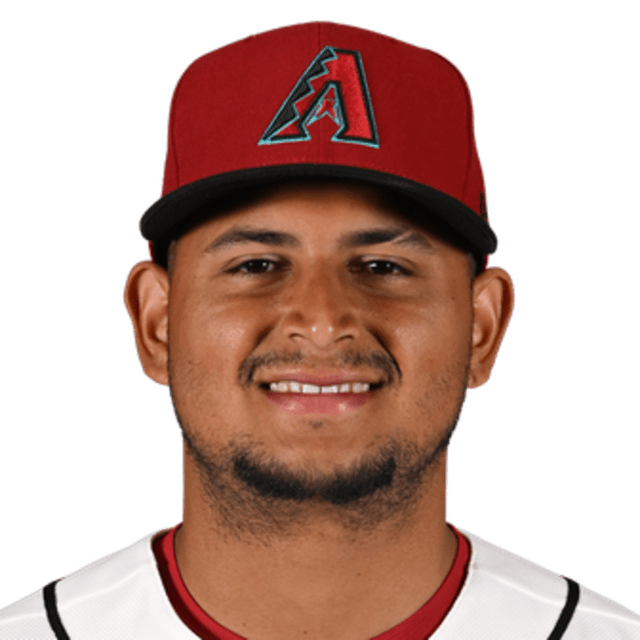
| 1 | Gabriel Moreno | Arizona Diamondbacks | 96 |
| 2 | Dillon Dingler | Detroit Tigers | 91 |
| 3 | Drake Baldwin | Atlanta Braves | 91 |
See the full catchers leaderboard: all 116 ranked nightly by real Statcast data, with card ratings.
Who is the best catcher in MLB in 2026?
Drake Baldwin tops the 2026 MLB catcher rankings on Legends Deck's Statcast-derived overall rating, followed by Will Smith and Iván Herrera.
The full ranked list of every qualified MLB catcher — refreshed nightly — lives on the catchers leaderboard, drawn. Beyond the top three, the broader catcher mix this season includes Shea Langeliers, William Contreras, Cal Raleigh, Ryan Jeffers, Adley Rutschman, Hunter Goodman, Gabriel Moreno, Austin Wells, and Alejandro Kirk; because the order is recomputed every night, check the live leaderboard for the current standings.
The 2026 catcher class is unusually deep — the gap between #1 and #12 on this list is one of the smallest at any position. Drake Baldwin earned the top spot through a combination of elite framing runs (a measurable defensive metric Statcast began publishing in 2020) and above-average contact quality at the plate. Cal Raleigh, William Contreras, and Will Smith bring more power production; Adley Rutschman and Gabriel Moreno bring elite framing and arm work.
How are MLB catchers ranked on Legends Deck?
Catcher is the only position where defense includes multiple specialized Statcast metrics beyond range:
- Framing runs — the share of borderline pitches a catcher converts from "ball" calls to "strike" calls, measured against the league-average catcher
- Pop time — the elapsed time from ball-into-glove to fielder-receiving-throw on stolen base attempts
- Arm strength — the average velocity on throws to second base, measured by Statcast
- Blocking rate — the share of pitches in the dirt that the catcher successfully prevents from getting past
- Hitting attributes — exit velocity, barrel rate, contact rate
The overall rating composite weights framing more heavily for catchers than range gets weighted at other positions because framing has been shown to be worth multiple wins per season — meaningfully more than the run-prevention impact of a great-defensive-but-mediocre-framing catcher. A 95 Overall catcher pairs at least one elite hitting attribute with elite framing OR elite arm work.
What makes the modern catcher different from historical catchers?
The catcher position has been transformed by three measurement revolutions in the past decade:
Framing went from invisible to dominant. Until ~2014, framing was an eye-test skill that scouts and pitchers knew about but couldn't quantify. Statcast's framing-runs metric — derived from per-pitch pitch-location data — made it measurable in runs prevented. Today's elite framers (Rutschman, Smith, Baldwin) save 8-15 runs per season relative to league-average framing, which is equivalent to about 1-1.5 WAR before you add anything offensive.
Pop time replaced "good arm." Statcast pop-time is reported to the hundredth of a second. The MLB average is roughly 2.00 seconds; elite is sub-1.90; the all-time recorded best is around 1.78. The metric is more discriminating than the old "above-average arm" scouting language and is part of how front offices now grade defensive catchers.
Robo-umps are coming. The ABS (Automated Ball-Strike System) challenge system has been tested in spring training 2025-2026 and is expected to gradually expand. When ABS becomes the default, framing-runs will partially or fully disappear as a skill — which means the position's value composition will shift back toward hitting and arm work. Front offices are quietly reweighting their catcher acquisition strategies accordingly.
Who is the best hitting catcher in MLB?
The top tier of catcher offense in 2026 is William Contreras, Cal Raleigh, Will Smith, and Iván Herrera. Each pairs above-average exit velocity with the position-adjusted offense bar (catcher offensive bar is meaningfully lower than corner-infield because of the defensive workload). Cal Raleigh in particular has hit 30+ HRs in consecutive seasons — production that would be respectable from a corner outfielder, let alone a catcher.
The position has become an offensive position relative to historical norms. The 2024-2026 stretch is the most offensively productive catcher era since the Mike Piazza years. League average exit velocity at catcher has climbed roughly 2 mph since 2018, partly because the framing-runs measurement made it possible to "pay" for defense in front-office models, which freed teams to draft and develop hitting catchers without sacrificing as much on the defensive side.
Who is the best defensive catcher in MLB?
The best defensive catchers in 2026 are the elite framers — Adley Rutschman, Will Smith, Drake Baldwin, and Gabriel Moreno lead the position on the defensive side, combining top-tier framing runs with strong arm work behind the plate. Framing is the single highest-value catcher defensive skill (worth roughly 1-1.5 WAR per season for the best framers before any offense), but a complete defensive catcher also blocks pitches in the dirt and posts a quick pop time on stolen-base attempts. Because framing, blocking, and arm strength are each measured separately and refreshed nightly, the precise current defensive order can shift week to week — the catchers leaderboard shows the live ranking with the full defensive splits.
How does catcher rating translate to in-game value on Legends Deck?
Catcher rating feeds into Franchise Mode and PvP matchups across multiple game systems. A high Defense catcher:
- Reduces opponents' stolen base attempts (pop-time effect)
- Steals strikes for your starting pitchers (framing effect — measurably reduces opponent batting average)
- Blocks more wild pitches (preventing baserunner advancement on borderline pitches)
- Pairs effectively with elite whiff-rate pitchers and hard-throwing pitchers to maximize per-pitch outcome value
Pairing an elite Defense catcher with a high-velocity, high-whiff pitcher generates the simulation equivalent of a modern dominant pitching battery. Browse the full card directory for current 2026 attribute splits.
Where do catchers fit in Legends Deck card collections?
Catcher is one of the highest-leverage position slots in deck construction because catcher defense compounds across every plate appearance the pitcher faces — not just the ones in their direct fielding range. Multiple 90+ Overall options exist in the current set; the position pairs particularly well with elite starters and closers for battery synergies. Jump to the catchers leaderboard for the ranked list with team filters.
Best Players at Every Position
Every position has a live ranked leaderboard on the MLB positions hub, refreshed nightly.
Infield
- Best First Basemen in MLB 2026
- Best Second Basemen in MLB 2026
- Best Third Basemen in MLB 2026
- Best Shortstops in MLB 2026
Outfield
Lineup
Pitching
Live Leaderboards
Every list below is ranked live and refreshed nightly: